In the beginning
From time immemorial our location was a part of the tribal lands of the Tasmanian Aboriginals, occupied by the two main cultural and linguist groups, the Oyster Bay (the Paredarerme) and the Big River (the Lairmairanepair) people.
Their overall population, based on current interpretations, appear to have been relatively small and sub clans from both groups are believed to have moved with the seasons between the east coast and the highlands.
Certainly, our position, sitting within the triangle of Lake Dulverton, Lake Tiberius and Lake Crescent, must have provided important sources of foods, and this valley would have been one of a limited number of lowland passages used for hunting, gathering and general movement within the area.
1803
The British founded the first European settlement in Tasmania at Risdon Cove in Hobart when Lieutenant John Bowen arrived with a contingent of 49 convicts, free settlers, and soldiers from New South Wales.
1821
Oatlands was officially founded and named by Governor Lachlan Macquarie. Due to its central location between Hobart and Launceston a small military barracks was established shortly thereafter for the control and management of the convict labour force.
1823
John Lakeland (most probably, but still to be confirmed), the Principal Superintendent of Convicts and later Assistant Inspector of Public Works, was granted 300 acres by Sir Thomas Brisbane, Chief Governor of New South Wales in June 1823 and this land included our site. It was also at this time that Thomas Anstey arrived in Oatlands with a grant of 2,000 acres where he built his residence, Anstey Barton, on the small hill immediately to the south of our entry gate.
1830
Thomas Anstey, who two years earlier had been appointed Police Magistrate of the region by Governor Macquarie, acquired Lakeland’s holding for 125 pounds and twenty-five wether (castrated male) sheep.
1854
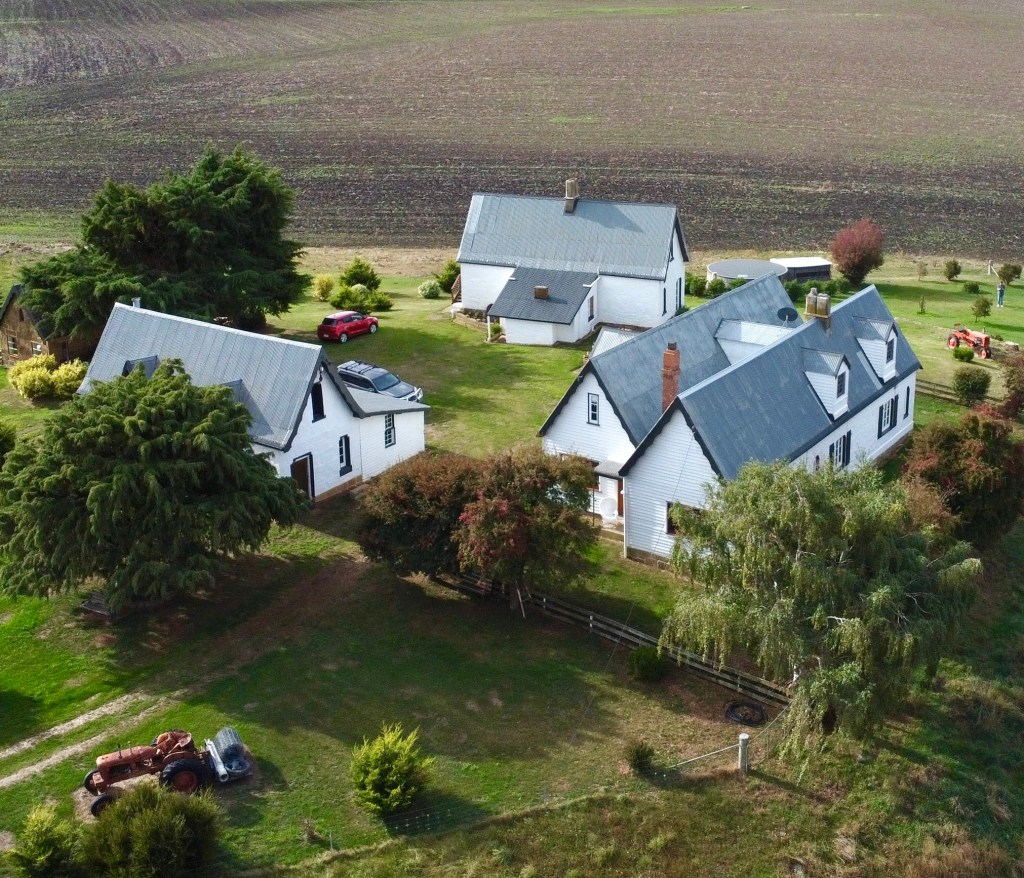
Anstey’s son, Henry Frampton Anstey, commissioned the construction of our three cottages, designed as workers cottages by the ex-convict architect Frederick Thomas to provide more appropriate accommodation for newly arriving immigrant families as tenants and outlines his intent in a letter to the Hobart Courier in that year. During this period Anstey’s land holdings grew to 60,000 acres and his house was maintained in the style of an old English homestead with butlers, maids, grooms and gardeners, with some forty men (including assigned convicts) looking after the land and stock.
1856
Van Diemen’s land becomes a self-governing colony, independent of New South Wales and was renamed Tasmania.
1860
Thomas Anstey died in 1851 and his wife subsequently returned to England. With his children dispersed, his estate was subdivided into twenty-four lots and put to market in 1860. A prime section of 3,543 acres, “A Splendid Estate … with a recently completed residence for a gentleman of fortune… with a delightful garden with a highly ornamental Pheasantry” (now known as Waverley Homestead, together with our cottages) was purchased by Henry Brock and renamed Brockton. In 1873 it changed ownership again, acquired by Brock’s kinsman George Wilson of Huntworth in nearby Jericho.
1878
Doctor James Wilson Agnew (later Sir James and Premier of Tasmania in 1886 / 1887) acquired the estate of some 15,000 acres and renamed it Waverley. It is believed that the name was inspired by the novels of the famous Scottish author, Sir Walter Scott and the property was to remain in the Agnew family for the next 136 years.
1882
Sir James’s son, Charles Stuart Agnew, purchased the racehorse The Assyrian after he won the Melbourne Cup in that year. He was then successfully raced in Tasmania and put to stud here, with the southern cottage having been converted to stables. The Assyrian died in 1895 and his memorial headstone still stands near our entry gate.
1920’s
A weatherboard room was built onto the southern end of the eastern cottage (now the main house).
1930’s
Over the years the cottages gradually fell into disrepair with casual farm workers and rabbiters living here. From 1930 until 1966 they were used as hay sheds with livestock occupying them. By the 1960’s they were missing both doors and windows, open to the elements and essentially derelict.
1966
James Philip (“Pip)” Agnew marries Lynne Headlam, and they move from Waverley Homestead to the Cottages. They chose to renovate the larger eastern cottage as their family home, renaming it Waverley Lodge. As the 1920’s extension was weatherboard, the new building was built with the same material.
1978
Waverley Cottage (the northern cottage and now Elizabeth Cottage) was restored by Lynne Agnew and commences operation as one of the first bed & breakfasts in Australia.
1982
Waverley Croft (now Shepherds Rest) was built using the stones relocated from a derelict colonial farm building on Pleasant Place, Lower Marshes, and the stables were converted into a Games Room.
2006
After the death of Pip Agnew, Waverley Cottages were placed onto a separate 2.5-acre title from the main Waverley estate and purchased by Lynne Agnew. The balcony was also added to the main cottage by Tim Agnew, who was living there at the time.
2014
The Cottages were sold by Lynne Agnew. The new owners renamed the complex Oatlands Manor and Waverly Croft became Rose Cottage. They installed irrigation, established the lawns and planted windbreaks to replace the old pines. Work was undertaken to restore the basic fabric of the buildings and bathrooms and kitchens were upgraded in both the main house and Waverley Cottage. Waverley Homestead and the surrounding land was also sold at this time to the Fish family, long established and well-respected residents of the area.
2021
Ruth and I became the new owners of the property in mid 2021, renaming it Bowhill Grange. Significant renovations and refurbishments have since been undertaken to upgrade the guest accommodation to better reflect and complement our unique location and heritage.
Today
We welcome you to Bowhill Grange and hope that you enjoy our home and its history as much as we do.
 Bowhill Grange